
Pain around the anus
Blogs
Anal Fistula Treatment
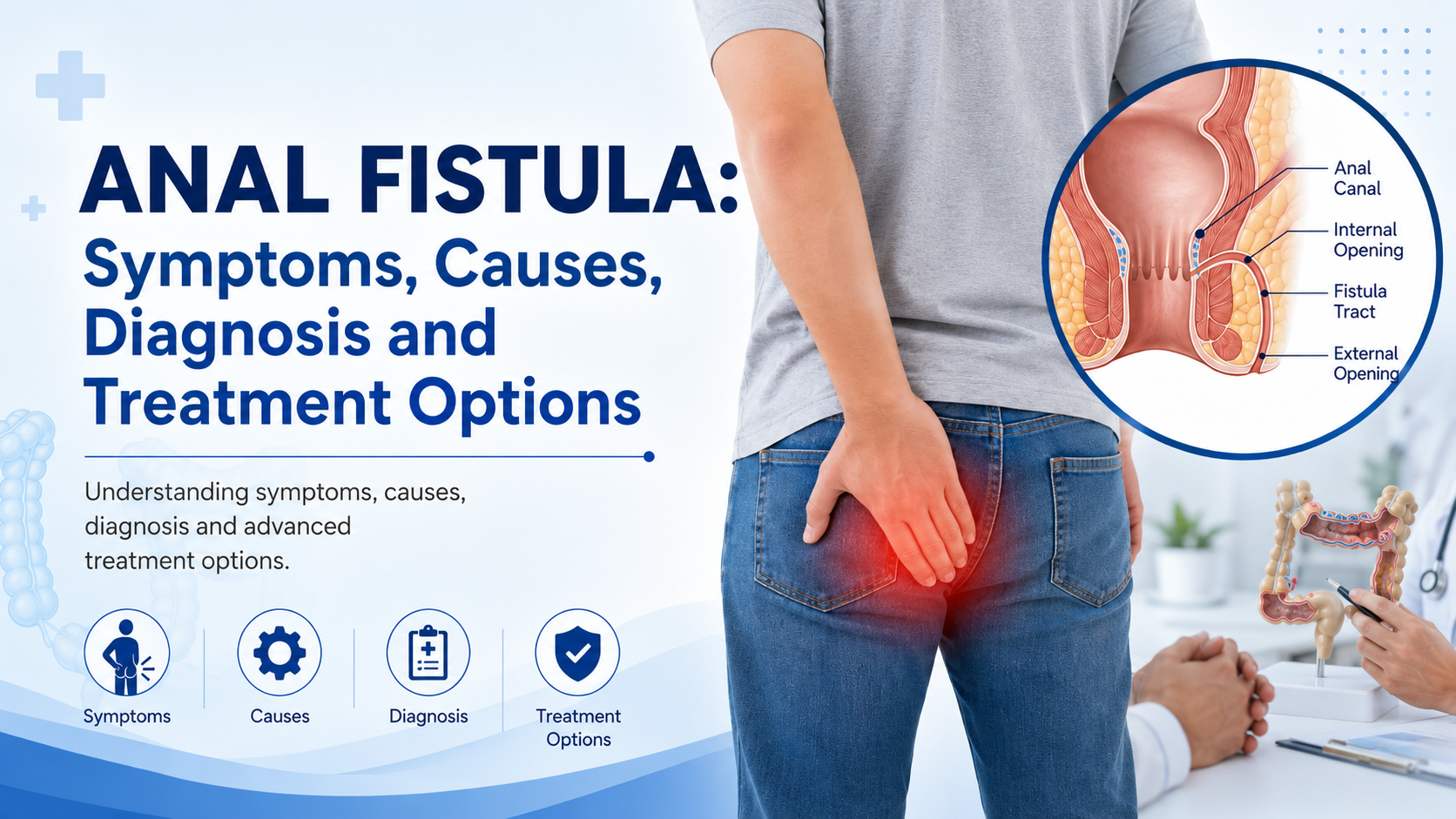
Anal Fistula: Symptoms, Causes, Diagnosis and Treatment Options
A perianal fistula, commonly referred to as an anal fistula, is an abnormal tunnel that develops between the anal canal and the skin surrounding the anus.
Perianal fistulas can cause pain, swelling, irritation and ongoing discharge around the anus. In many cases, symptoms can persist or recur without medical assessment.
Understanding the symptoms, causes and available management options may help patients seek appropriate care and make informed decisions about their treatment.
What Is a Perianal Fistula?
A perianal fistula is an abnormal tunnel that develops between the anal canal and the skin surrounding the anus. Most perianal fistulas develop following an anal abscess, where an infection forms a collection of pus that subsequently drains.
In some cases, the tract remains open and may continue to cause symptoms such as discharge, irritation or recurrent infection.
Common Symptoms of a Perianal Fistula
Swelling or redness near the anal area
Persistent or recurrent discharge of pus or fluid
Irritation or itching around the anus
Discomfort while sitting
Recurrent anal abscesses
Fever or feeling generally unwell in some cases
What Causes a Perianal Fistula?
Most perianal abscesses occur after blockage and infection of an anal gland. This can sometimes result in a fistula in ano.
Other causes may include inflammatory bowel diseases such as Crohn's disease, previous anal infections, trauma or injury, radiation therapy, certain infections and, rarely, malignancy.
How Is a Perianal Fistula Diagnosed?
Diagnosis typically begins with a medical history and physical examination. Additional investigations may include physical examination, MRI scan, endoanal ultrasound and examination under anaesthesia, also known as EUA.
Can a Perianal Fistula Heal Without Treatment?
Some symptoms may improve temporarily; however, many perianal fistulas persist because the underlying tract remains present.
Management options depend on the type and complexity of the fistula and should be discussed with a colorectal specialist.
Treatment Options for Perianal Fistula
Treatment recommendations vary according to the fistula's anatomy, complexity and relationship to the anal sphincter muscles.
01
Fistulotomy
May be considered for selected simple fistulas.
02
Seton Placement
Commonly used in more complex fistulas.
03
Advancement Flap Procedures
May be suitable for selected patients depending on the fistula type.
04
Fistula Plug or Biological Glue
May be considered in specific circumstances.
05
Laser Assisted Closure of Fistula
May be considered in specific circumstances.
06
Video Assisted Fistula Closure
May be considered in specific circumstances.
07
LIFT Procedure
Ligation of intersphincteric fistula tract may be considered in specific circumstances.
08
Modified LIFT Procedure
May be considered in specific circumstances after specialist assessment.
Not all treatment options are suitable for every patient. A specialist assessment is required to determine the most appropriate approach.
Recovery Following Treatment
Recovery varies depending on the procedure performed and the complexity of the fistula. Patients may be advised to maintain good hygiene, take prescribed medications as directed, follow dietary recommendations, maintain adequate fluid intake, attend follow-up appointments and gradually return to normal activities as advised.
When Should You Seek Medical Advice?
Medical assessment should be considered if you experience persistent anal pain, recurrent abscesses, ongoing discharge near the anus, swelling or redness around the anal area, or symptoms affecting daily activities.
Perianal Fistula Assessment at Elevio
At Elevio Colorectal & Pelvic Floor Clinic, we provide comprehensive assessment and management of perianal fistulas and other anorectal conditions.
Treatment recommendations are tailored to each patient's individual circumstances following specialist consultation and appropriate investigations.
If you are experiencing symptoms of a perianal fistula, a consultation with a colorectal surgeon can help determine the cause of your symptoms and discuss available management options.
Related Topics
Anal Fistula Treatment Bella Vista
Anal Fistula Symptoms Bella Vista
Anal Fistula Causes Bella Vista
Anal Fistula Diagnosis Bella Vista
Perianal Fistula Treatment Bella Vista
Fistula Specialist Bella Vista
Colorectal Surgeon Bella Vista
Fistula Treatment Options Bella Vista
Recurrent Anal Abscess Bella Vista
Anal Pain Specialist Bella Vista